

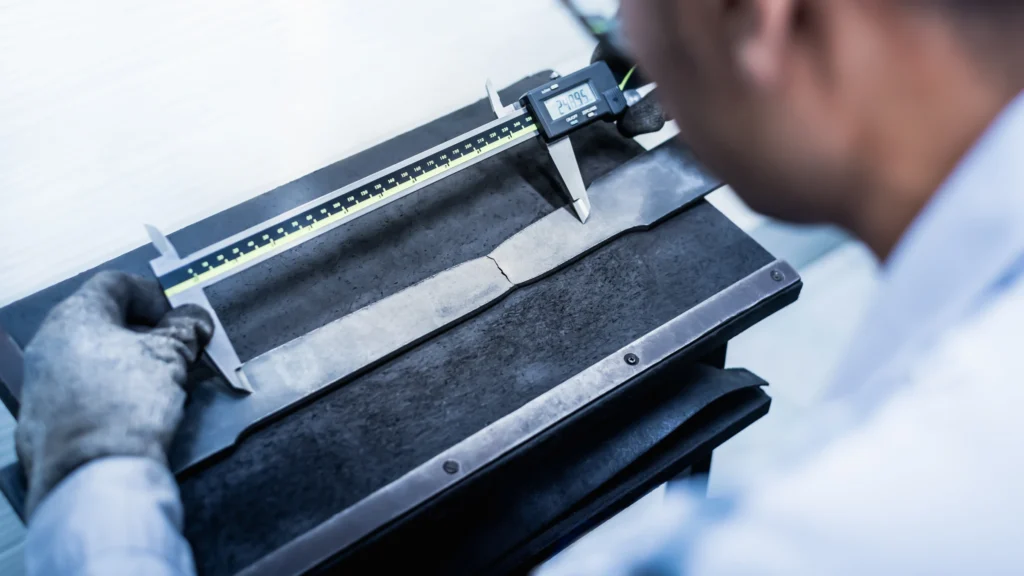
NACE TM0177 Stress Test
The independent NACE TM0177 tests has proven the resistance of Hardide coating to sulphide stress cracking and stress corrosion in H2S environments.
The Hardide coating has a volume porosity of <0.05%, which is effectively pore-free, with no through porosity from 1μm of coating thickness. It contains no binder-phase such as cobalt or nickel. This allows the coating to protect substrates against corrosive and aggressive media including HCl, H2SO4, HF, H2S and molten metals.
Sulphide stress corrosion cracking is an issue for downhole tools as the natural gas and crude oil materials being processed often contain considerable amounts of H2S. Equipment that comes in contact with H2S environments can be rated for sour service with adherence to NACE MR0175/ISO 15156 for oil and gas production environments or NACE MR0103/ISO 17945 for oil and gas refining environments.
Hardide coated components perform extremely well in these environments, protecting the substrates of downhole tooling, preventing part failure, extending component life and reducing downtime.
Sulphide Stress Cracking Test NACE TM0177-2005 / ASTM G39
30 Day Test
5% NaCl, 0.5% Acetic Acid, saturated with H2S

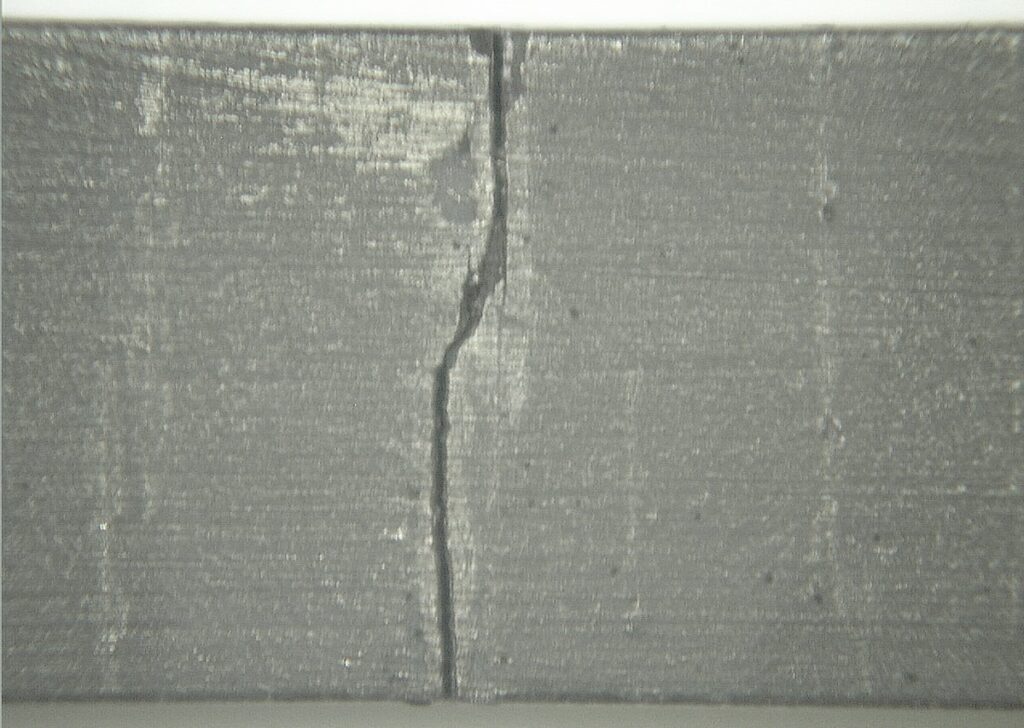
The NACE TM0177 Stress Test cocluded that the uncoated 17-4PH sample failed at an applied strain level of 2000µε as a result of sulphide stress cracking.
The three Hardide coated 17-4PH samples tested at applied stress levels of 1500 µε and 2000 µε did not exhibit any evidence of coating cracking, degradation or de-lamination under the imposed test conditions.
| Corrosive and aggressive media | Hardide coating property |
|---|---|
| Hydrochloric Acid | Resistant to attack |
| Sulphuric Acid | Resistant to attack |
| Nitric Acid | Resistant to attack |
| Aqua Regia – cold | Resistant to attack |
| Oxygen to 400°C | Resistant to attack |
| Water to 600°C | Resistant to attack |
| Hydrogen | Resistant to attack |
| Ammonia below 700°C | Resistant to attack |
| CO to 800°C | Resistant to attack |
| Chlorine Gas to 250°C | Resistant to attack |
| Molten glass to 1700°C | Resistant to attack |
Related Resources
Rotating Bend Fatigue Test
Independent testing has proven that the Hardide-A coating improves the fatigue life…
Read More →
Impact Resistant & Scratch Test
Hardide coatings are deposited as a uniform, crack-free coating that is tough…
Read More →
Friction Coefficient Test
Hardide coatings have a low dry friction coefficient as proven in the…
Read More →